Enterprise & M&A Teams
Know what you're inheriting before you merge it.
An acquisition or a reorg hands you a second Salesforce org, sometimes a fifth. Hubbl scans each one the same way and puts them on one scorecard, so you can see the overlap, the risk, and the effort before you commit to a consolidation plan.


Every deal comes with a Salesforce org nobody has mapped.
Integration plans get built on slides and interviews. The org itself, with its customizations, packages, integrations, and access, stays a black box until the migration project uncovers it the expensive way. Timelines slip, costs climb, and the combined org ends up more complex than either one was.
Tech diligence on the org, before close, not after.
Scan the target's org and get an objective read on its health: security exposure, technical debt, outdated packages, integrations, and how complex it really is. Bring the numbers into the deal conversation instead of discovering them after close.
- Hubbl Score and complexity
One objective read on the org's health. - Security exposure
Risky permissions and integration access you'd be inheriting. - Package and integration inventory
Every app, its version, and what it connects to.

A ranked punch list, not a list of 200 problems.
Hubbl scans every org the same way, so you compare them on equal terms: Hubbl Score, issue counts, complexity, installed packages, connected apps. See where orgs duplicate each other and where one is carrying risk the other isn't.
- Consistent scoring
The same method on every org, no matter who built it. - Overlap in plain view
Duplicate apps and packages across orgs. - Risk by org
Know which org needs the most work before you pick a survivor.
A consolidation plan grounded in what's actually there.
Decide which org survives, what moves, and what gets retired based on real signals: last-used dates, field population, outdated packages, apps with low adoption. Clean up before you migrate so you don't pay to move the debt.
- Retire before you move
Leave behind what no one uses. - Dependency context
See what breaks if a field, flow, or package goes. - A sequenced backlog
A sequenced backlog Consolidation work ranked by priority and effort.
One consistent view across every org you run.
For enterprises running more than one org, Hubbl gives central IT the same read on each one, with the enterprise controls to operationalize it: SSO, the Hubbl MCP, and coverage across sandboxes. Track each org's health over time and catch drift before it becomes the next consolidation project.
- Portfolio health
Every org's Hubbl Score in one place. - Enterprise controls
SSO, MCP access, and sandbox coverage. - Drift alerts
New high-severity findings flagged as each org changes.
The same finding sounds different depending on who's in the room.
A scan result an admin hears as "more work on my plate" is the exact thing a CFO or COO hears as "we need this handled now." Hubbl gives you both versions of the finding — so your backlog stops being your private burden and becomes leadership's priority.
"That's more work for me."
One more thing on a list that's already too long — a risk you now own, on an org you're already stretched thin keeping alive.
"We need this now."
Quantified exposure, license waste, or an AI-readiness gap with a number attached — a business risk worth funding, resourcing, and prioritizing today.
Why it matters for you: the finding that feels like a burden at your altitude is a mandate at theirs. Hubbl translates the same issue into the language of the person who can give you the time, budget, or help to fix it — turning "I have too much to do" into "leadership asked me to lead this."
Every solution runs the same play.
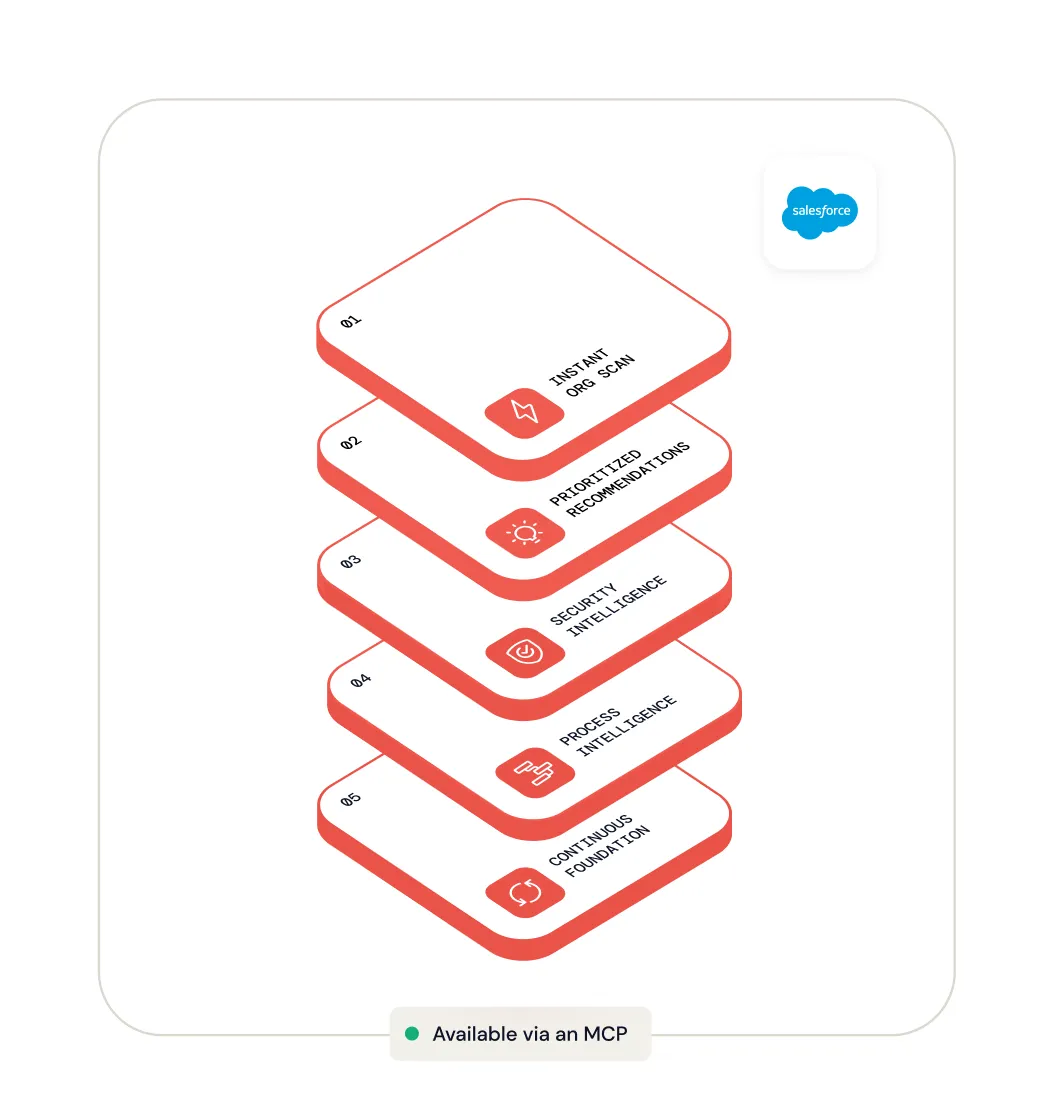
No matter the role or the goal, Hubbl follows one motion — turn the lights on, understand and act, then stay clean and get AI-ready.
See the whole org
A credential-free X-ray in about two minutes — inventory, security exposure, and process reality no admin could map by hand.
Fix what matters first
A ranked backlog with the fix attached to every item — ticket it, prompt it, or delegate it, and close tech debt at the speed of AI.
Keep it healthy
Continuous monitoring holds the line as the org evolves — and turns your ongoing work into a health score you can show.
Merge the companies without multiplying the complexity.
The value of a deal depends on how fast the combined company runs as one. Hubbl gives integration teams an objective map of every org, a consolidation plan built on evidence, and a way to keep the result clean.
- Price the integration - about the org in seconds, not days of digging.
- Consolidate with confidence - knowing what each change touches.
- Stay clean after day one - with always-on monitoring.
Hubbl is built for the teams who make two companies one.
Lead integration
"We close in 90 days and nobody has looked at their org."
Get an objective read on the target org before the integration plan is locked.
Enterprise architect
"Every org we run is its own world."
One scoring method across every org, and a clear view of the overlap.
CIO
"The board wants synergy numbers. I need the real integration cost."
Evidence on complexity and effort to set the plan and the budget.
The capabilities behind your solution.
Your role runs on the same platform — here's where to go deeper.
Org Consolidation & Multi-org
Map, compare, and de-duplicate across orgs before you merge.
Instant Org Scan
The scan that maps eash org, the foundation for everything above.
Org monitoring + AI readiness
Reclaim license and redundant tooling as the orgs come together.
Turn the lights on. Then, fix everything.
Scan your org in 2 minutes. See what's broken, in what order to fix it — and get the prompts to do the work.