Org Consolidation & Multi-Org
Merge your orgs without breaking what works.
Acquisitions, regional rollouts, and business-unit sprawl leave you running multiple Salesforce orgs — and consolidation stalls because no one can see across them. Hubbl scans every org in minutes, compares them side by side, and maps what a merge will touch. Consolidate on evidence, not a spreadsheet and a prayer.
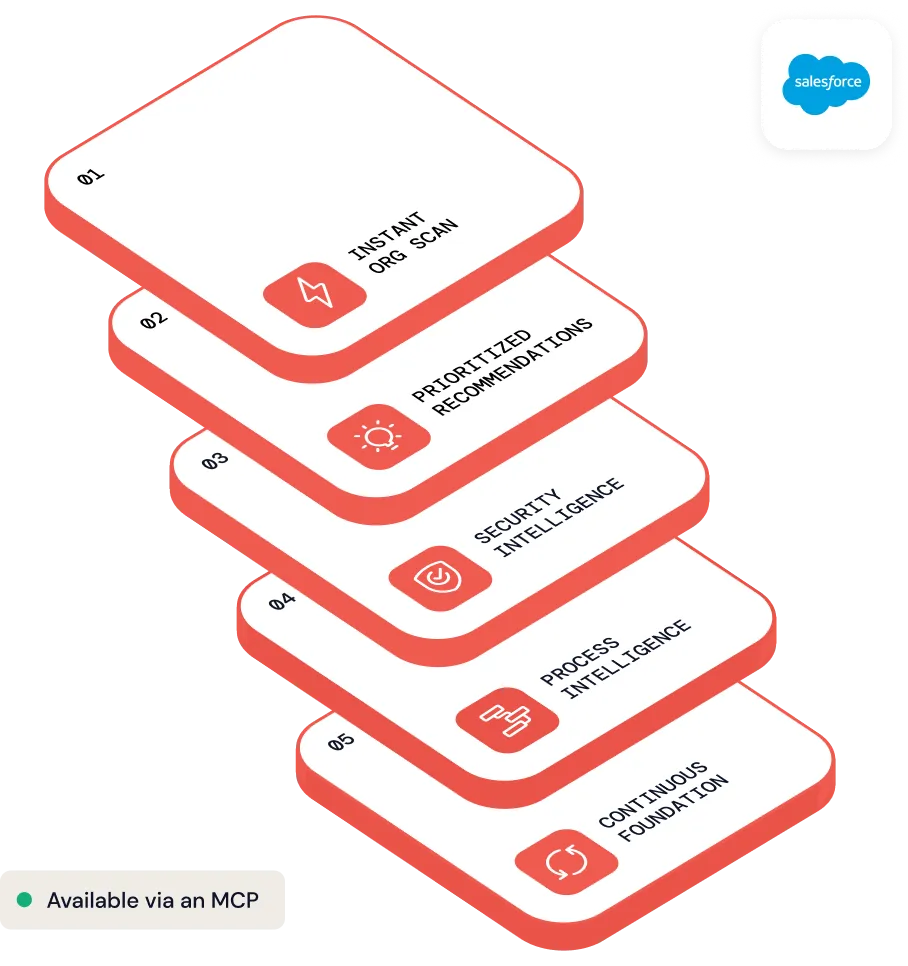
Every org is a black box — and you have several.
Consolidation projects live or die on what you can see. Acquisitions, regional rollouts, and business-unit sprawl leave you running multiple Salesforce orgs, each built by different people with different conventions — overlapping objects, conflicting automations, duplicate customizations no one has inventoried. The merge plan gets built from stale docs and tribal knowledge, the timeline slips by quarters, and something critical breaks at cutover. Hubbl gives you a normalized picture of every org, shows exactly where they overlap and conflict, and maps what a merge will touch — before you commit to a plan.
One inventory across every org.
Scan each org in about two minutes and get a complete, normalized inventory — objects, fields, flows, packages, permissions — in a single view. Stop reconstructing what's inside an acquired org from a founder's memory and a two-year-old diagram.
- Every org, one view
Inventory each org and see them together, not in silos. - Normalized, not raw
The same structure across orgs so they're actually comparable. - Minutes, not months
No discovery workshops just to learn what you own.

See exactly where your orgs overlap.
Hubbl diffs your orgs against each other — the same Account object built three ways, duplicate custom fields, automations that do the same job differently, packages installed in one org but not another. The overlap and the conflicts surface automatically, so you know what merges cleanly and what needs a decision.
- Cross-org diff
Matching objects, fields, and flows lined up side by side. - Duplication & conflict flags
Catch the same thing built two ways before you merge it. - Consolidation candidates
See what collapses into one and what has to be reconciled.
Know what a merge touches — before cutover.
Before you migrate a field, retire an automation, or fold one org into another, Hubbl shows you everything downstream that depends on it. The dependency map turns a high-stakes cutover into a set of changes you can sequence and de-risk — instead of finding the breakage in production.
- Dependency map per org
What every field, flow, and integration connects to. - Blast radius before you migrate
See what a consolidation move will affect. - Sequence the cutover
Order the work so nothing critical drops in the merge.
Show the merge paid off.
Hubbl scores each org's complexity, risk, and debt — so you can show the estate before consolidation and the leaner, healthier org after. Track duplicate objects eliminated, orgs retired, and complexity removed, and turn a multi-quarter program into a number leadership can see.
- Before / after by the numbers
Duplication and complexity removed, orgs retired. - Ongoing multi-org health
Keep every remaining org monitored as it evolves. - License & cost signal
Surface what consolidation frees up.
Every solution runs the same play.
No matter the role or the goal, Hubbl follows one motion — turn the lights on, understand and act, then stay clean and get AI-ready.
See every org
A credential-free X-ray of each org in about two minutes — inventory, security exposure, and process reality no one could map by hand.
Compare and consolidate
A cross-org diff and dependency map — so you merge on evidence, sequence the cutover, and retire duplication instead of guessing.
Keep it healthy
Continuous monitoring holds the line across the remaining estate — and keeps the consolidated org ready for agents and Agentforce.
From a sprawl of orgs to one you actually understand.
You go into the consolidation knowing exactly what you own, where it overlaps, and what a merge will break. The plan is built on evidence instead of assumptions, the cutover is sequenced instead of hoped for, and the result is a leaner estate you can prove. Fewer orgs, less duplication, one clear picture.
- Plan on evidence - a merge blueprint built from what's actually in each org.
- Cut over with confidence - the dependency map catches what a spreadsheet misses.
- Prove the payoff - orgs retired and complexity removed, in a number leadership funds.
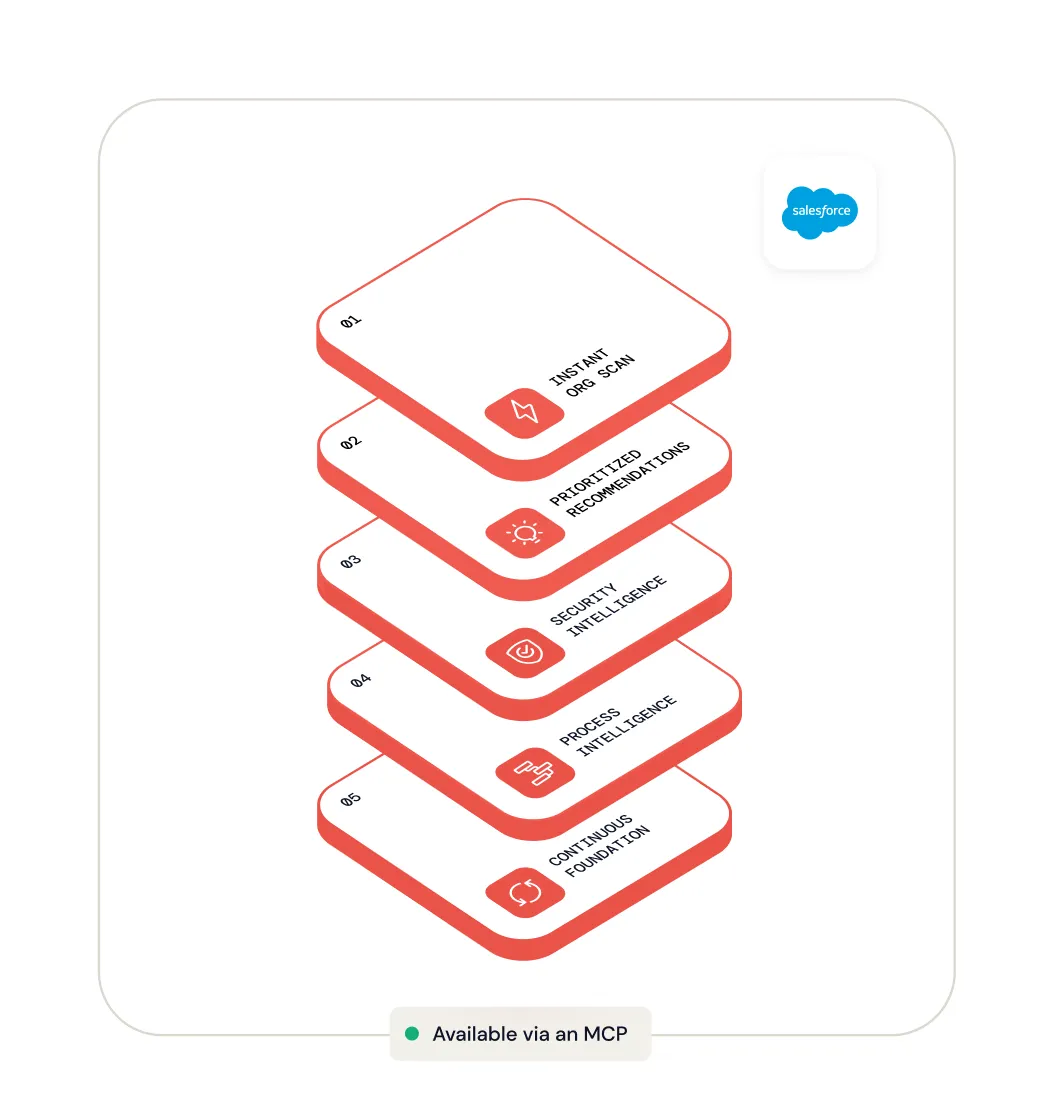
Hubbl is built for the team holding the merge plan.
You're merging after an acquisition
"We bought the company — now we own their org and don't know what's in it."
Inventory the acquired org in minutes and see exactly how it overlaps with yours.
You run multiple orgs
"Regions and business units each have their own org, and none of them match."
Compare every org in one place and find what can safely collapse into one.
You're scoping a consolidation
"Leadership wants one org, and I have to promise a timeline I can't yet see."
Build the plan on a real cross-org diff and dependency map, not a discovery guess.
The capabilities behind your solution.
Consolidation runs on the same platform — here's where to go deeper.
Instant Org Scan
The two-minute X-ray that maps each org — run it once per org to compare them.
Process intelligence
The automation and dependency map that shows what a merge will actually touch.
Org monitoring + AI readiness
Keep the remaining estate clean as it evolves — and track health over time.
Turn the lights on. Then, fix everything.
Scan your org in 2 minutes. See what's broken, in what order to fix it — and get the prompts to do the work.